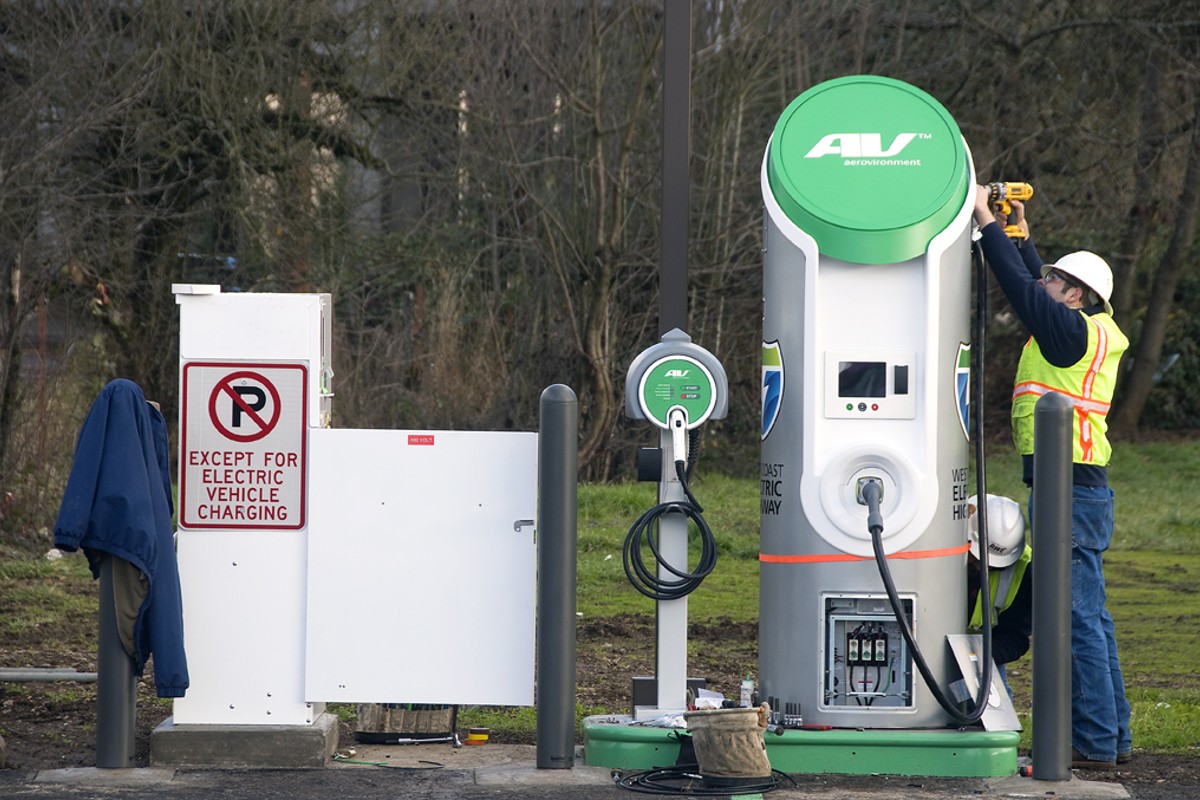
It may take only five minutes to fill the gas tanks. In contrast, electric vehicles connected to an EV charger can take anywhere from 15 to 30 minutes to charge. This is a problem that many scientists and automotive experts are trying to fix.
“Fast charging is the key to increasing consumer confidence and overall adoption of electric vehicles,” said Eric Dufek, PhD, in a press release. “This will allow vehicle charging to be the same as filling up at a gas station.”
small man
Towards that end, Dufek and his research team recently presented their design plan for a 10-minute charging method at the American Chemical Society in Chicago. This superfast electric fill-up is applicable to rapidly power a variety of EVs without damaging the battery. Hopefully this technological advancement can help supercharge President Biden’s aim that half of all US vehicles sold by 2030 are electric or hybrid.
Why fast EV charging is important
Consumer Reports surveyed 8,027 Americans from different locations, races, and backgrounds to determine “how people perceive EVs and potential purchase barriers.” The encouraging news was that over a third of respondents said they would consider buying a fully electric vehicle. The top reason surveyors reported hesitation was charging logistics and the distance allowed at a full charge. Faster electric refills can help change those perceptions.
fast EV charging problem
The reason most electric vehicles take several minutes to recharge is because jamming the electric charge in a lithium-ion battery can quickly cause problems. The American Chemical Society reports that while charging, lithium ions move from the cathode on one side of the lithium-ion battery to the anode on the other. Accelerating lithium ions can shorten charge times, but in turn, can lead to lithium buildup from ions that do not migrate. This concentration can accumulate, leading to harmful cathode wear and potentially premature battery failure.
Although these types of failures are not common, they do happen. The cost of fixing an EV that is out of warranty can be more than enough to scare off potential buyers. More than half of those surveyed by Consumer Reports said both the cost of purchasing and/or maintaining an EV are barriers to purchase. Failure of major electrical components can sometimes cost more than a new car. eBay listings for used Tesla battery packs often go for over $30,000.
EV Charging Solution
To address this delicate balance, DuFek and his team at the Idaho National Laboratory incorporated machine learning techniques to ‘teach’ chargers about the state of lithium-ion batteries and to create different charging protocols for each battery. did. This came through learning algorithms, training the computer to analyze 20,000 to 30,000 data points to indicate the quality of the battery charge and the amount of aging or degradation, if any. The researchers then input this data to “identify and optimize new protocols” that were then applied to the new batteries. And it worked.
“We have significantly increased the amount of energy that can go into a battery cell in a short amount of time,” Dufek said. “Currently, we are seeing a battery charge over 90% in ten minutes without lithium plating or cathode cracking.”
The research team plans to continue work to develop more efficient methods that optimize rapid lithium-ion charging. The ultimate goal, Dufek said, is for electric vehicles to eventually be able to “tell” their power requirements to charging stations, so the juice can be safely delivered in just minutes.
Editors’ Recommendations