What characteristics does the star graveyard present in the Milky Way have? Here are some of the keys that are known.
Despite the existence of organizations such as NASA, ESA or, for less time, China’s public body on space research, the truth is that we still do not know many of the effects that occur continuously in the Universe. The presence of stars, satellites or asteroids is known, but sometimes the events that affect the same are unknown. In relation to the Milky Way, did you know that over millions of years it has become a graveyard of stars?
This has been cataloged by the University of Sydney after conducting a study. Apparently, after turning off, they end up becoming neutron stars or black holes, something that has not stopped happening over time. The main research organizations in the matter have cataloged those that could have a greater incidence on the Earth in a hypothetical future. This new approach, however, highlights the extent to which changes have taken place in our galaxy.
Let us see, therefore, what are the conclusions of the study that has been carried out by this Australian university, why it is an investigation whose results can be analyzed in more detail in the future and, of course, to what extent the performance of this type of study may be more or less relevant. Here are the keys to an investigation that is acquiring great prestige in the scientific field.
This is the cemetery that has been forming in the Milky Way
The research, published in the specialized portal Monthly Notices of the Royal Astronomical Society, started from the basis on which a black hole is created. From then on, he carried out studies on a whole series of what, in their day, were stars cataloged as such. The Difficulty establishing a pattern of behavior of the various stars throughout its life determined that different technologies based on artificial intelligence were used. In this way, it was possible to determine a valid model to be able to carry out the project.

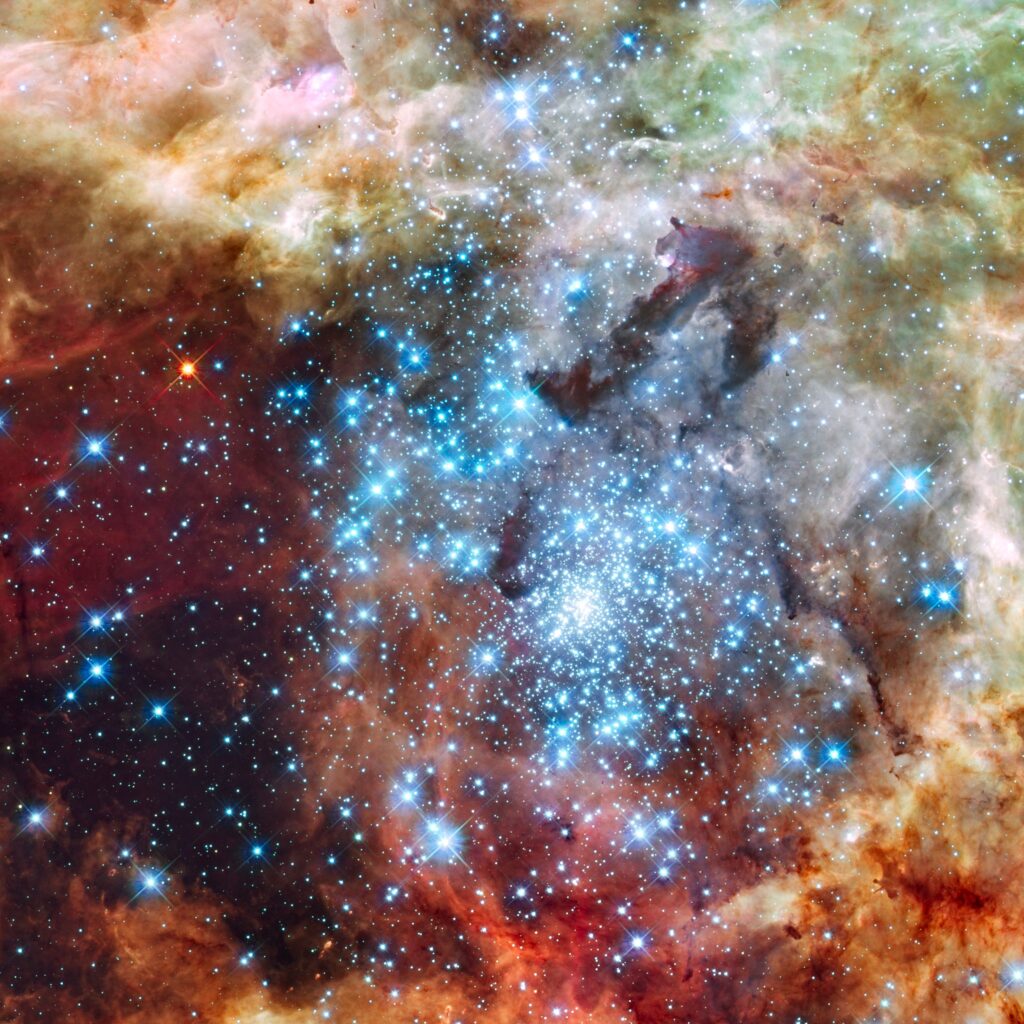
The Milky Way has become a kind of graveyard for stars. Image: Research and Science
According to the first estimates carried out by this statistical modeling process, it has been possible to verify how the closest neutron star to this galactic graveyard could be about 62 light years away. Similarly, a black hole could be as close as 68 light years. Now, what would be the density of the Milky Way that has been converted into an improvised graveyard? Estimates suggest that it would only occupy around 1% of the total area.
Similarly, after the explosions that accompanied the stars, a lot of material present in them it ended up going to the confines of the Milky Way, so its recovery is impossible with current technology. It is expected that other research programs related to the subject will be developed over the next few years.