
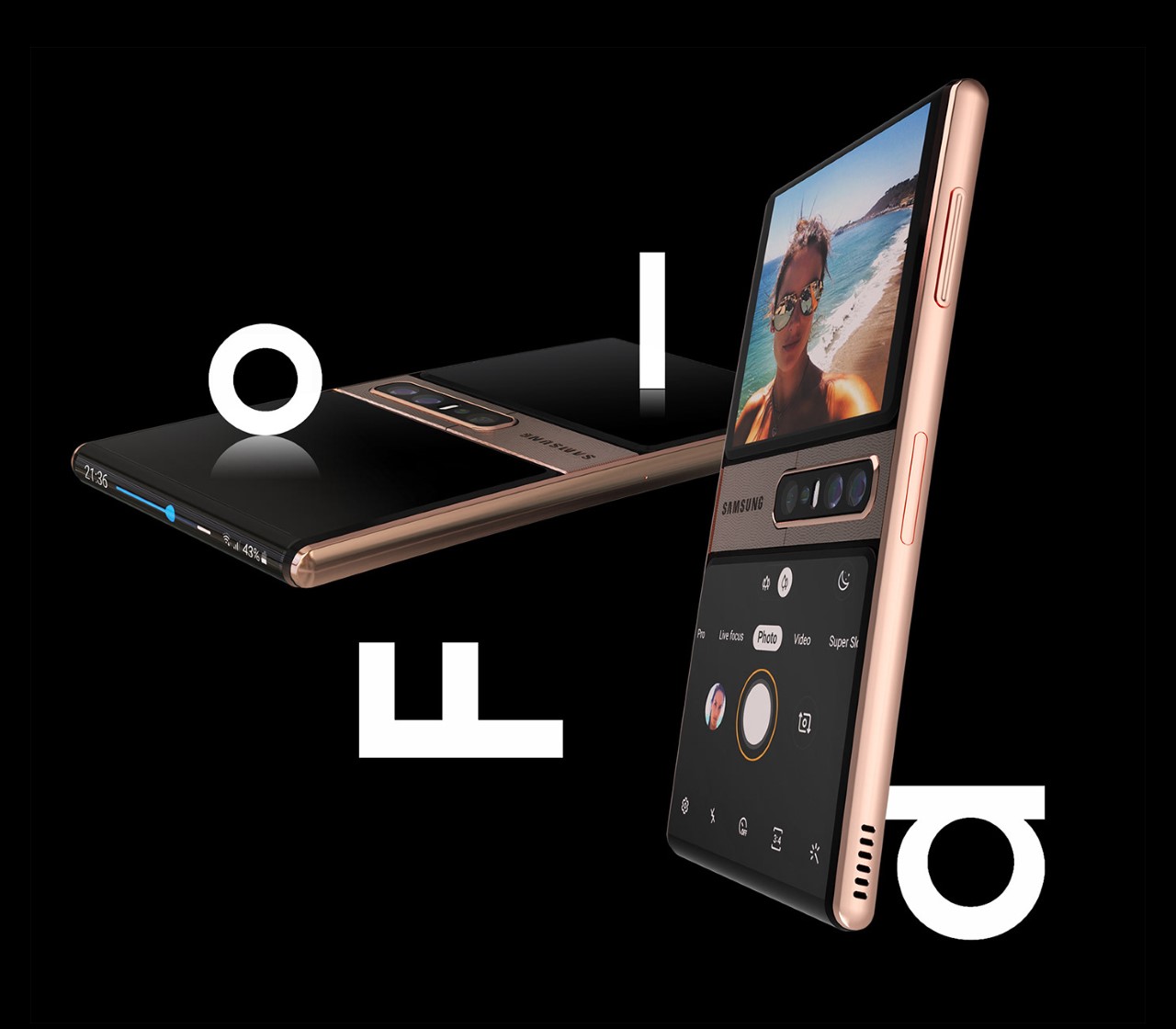
The only part of the phone that is not a screen is its camera bump.
It’s safe to say that we’re still in the era of foldable displays, though the pandemic, a supply chain crisis, and a war have certainly slowed innovation a bit. That being said, if there’s any company that still has any bandwidth to push folding phones, it’s probably Samsung. (In fact, this Sunday, images of the Galaxy Z Flip4 leaked online to confirm the company’s efforts)
The biggest problem with the folding display isn’t the crease, contrary to popular belief, it’s the lack of a proper template. Before the iPhone defined what the phone would look like for the next decade, mobile phones came in all kinds of shapes and sizes. You had the popular candybar, clamshell, slider and whatever on the Nokia N93. As we move into a new era of folding displays, the age-old problem makes a comeback – what’s the right format? Samsung explored the book-inspired format with the Galaxy Fold, the clamshell format with the Z Flip, and it looks like this new concept proposes yet another direction I call it the ‘parchment scroll’ format.
Designer: Alexander Bazilevsky

The Samsung Galaxy Fold Mini is based on the company’s folding range with a new format. Colloquially known as the ‘parchment scroll’ format, the concept comes with a single vertical display with two folding points on the top and bottom edges of the phone. Like a scroll that can be expanded vertically by unrolling the top or bottom, the Galaxy Fold mini can open up and down, making for a dramatically taller phone. Tilt it horizontally and you have an incredibly widescreen display that’s perfect for multitasking.

What the Fold Mini does is create a unique screen layout when closed, while unlocking multitasking capabilities, and providing a screen large enough to watch two movies at once. The edge of the wraparound screen serves as an incredible notification bar (image above), while the small portion of the screen that folds back creates an interesting camera interface that lets you use the primary camera lens to click natural selfies. allows to use. The upper screen serves as a viewfinder, while the lower houses the camera controls, creating something that feels incredibly natural.

This format has some great advantages. The single-screen means you have to worry less about what to do when your phone is turned off (the Galaxy Fold and Z Flip need a secondary screen), and this layout not only cuts down on the number of screens, it also works with cameras. Also, as there is no ‘front facing’ camera on this concept, the way there is in other folding phones. Just turn on your phone and you have a camera as well as a screen waiting to welcome you, whether it’s for a selfie or a video call.

However, the most obvious thing is that there is no urgent need for a phone with such a widescreen display. When opened up, the Samsung Galaxy Fold Mini Concept has what I’d imagine is somewhere close to a 30:9 ratio, given that it packs a 16:9 screen by 2 (front as well as back). ) multiplies by. Other than multitasking (how much is anyone really multitasking?), the need for a wider screen isn’t entirely clear, though only the future can tell us. I didn’t think we needed screens on our wrists, but here we are with smartwatches that are such a smashing success. What this concept does, however, is conjecture – which is arguably one of the most important tasks in designing for the future. What are your thoughts?


