
C Scott Brown / Android Authority
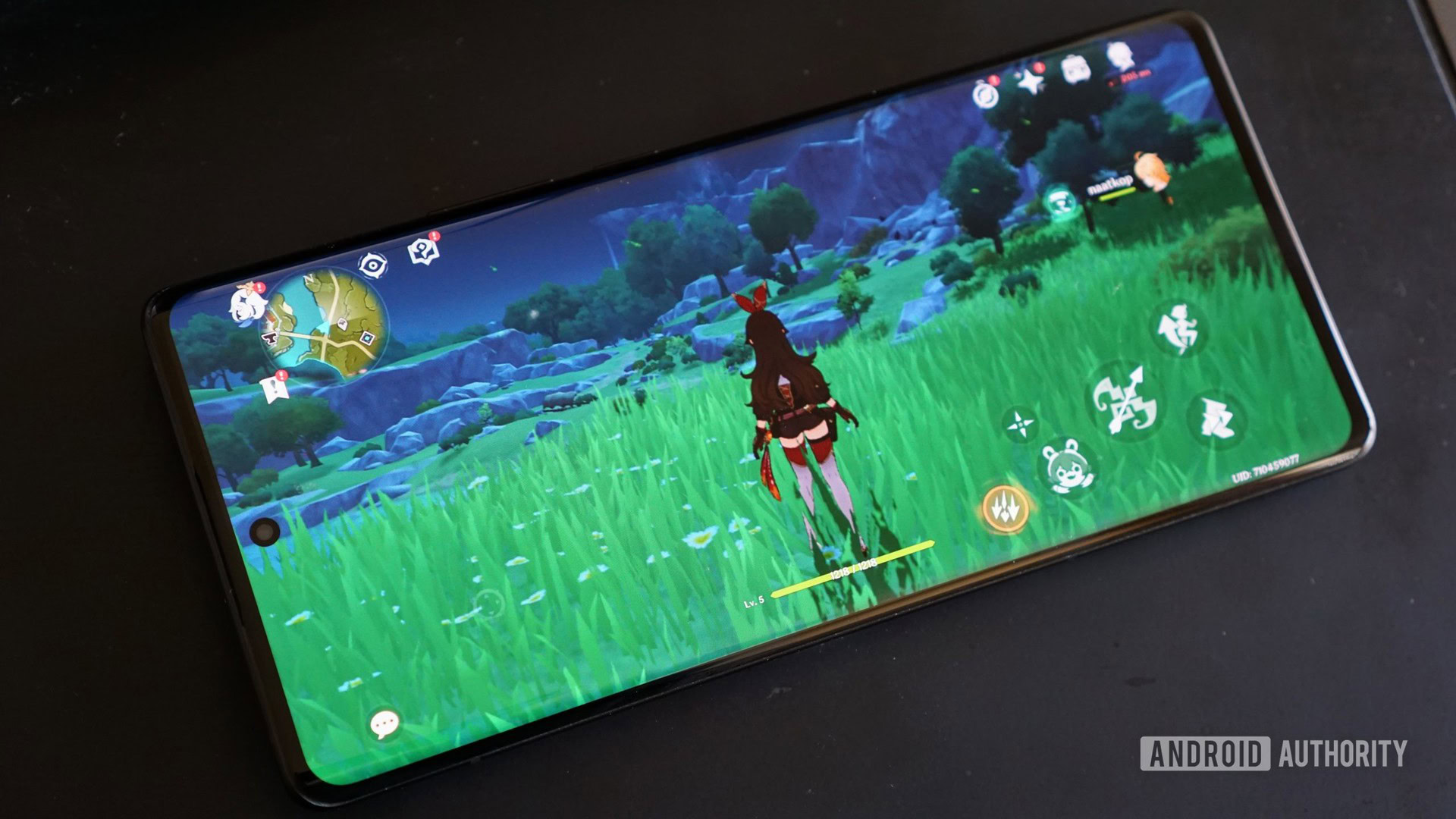
Samsung found itself in the middle of a heated controversy last week when reports of alleged throttling began circulating on Korean technology forums. Dozens of users complained that Samsung’s Game Optimizing Service (GOS) limited performance within select apps and games on their smartphones, some going back several generations. The company responded predictably, stating that the feature is intended to protect the CPU and GPU from overheating. This isn’t the first time we’ve seen phones artificially limit apps and games, something OnePlus caught on in 2021 as “optimizing” performance.
It’s easy to see why so many Android enthusiasts are so pissed – you’re essentially paying for premium hardware performance that’s mostly inaccessible. For example, in the case of the 3DMark benchmark, the Galaxy S22 Ultra’s score drops by about 50% with the optimization service force-enabled. While Samsung deserves criticism for not disclosing this behavior, let’s try to understand why it went down this path in the first place.
More on throttling: Hey OnePlus, it was never about the crime, it was about the cover-up
Throttle vs Unthrottle: Was Samsung Right?

Hadley Simmons / Android Authority
When working with a portable device such as a smartphone or tablet, factors such as power consumption, battery life, and heat are arguably much more important than raw performance. And in those respects, new testing shows that Samsung’s game optimizing service can really justify its name.

The above plot, courtesy of golden reviewer on YouTube, shows how much extra power an “unoptimized” app can get from the S22 Ultra’s Snapdragon 8 Gen 1 SoC. With GOS turned off, via an unofficial solution, the power draw routinely exceeds 10W within the first minute. That’s a lot for a mobile device, which historically aimed to peak in the region of 7W. As the SoC starts to choke, the power consumption drops after a few minutes of heavy usage.
With GOS turned off, everything seems to be working as it should – on a lot of power which will drain more battery and heat up the device faster. While some users want to draw the maximum possible power, it’s not sustainable here, and thermal throttling does kick in. But one thing to note is that the device keeps on drawing more power after enabling thermal throttling vs device with GOS. Also, take a look at this framerate plot from a single run:

In the second graph, we see that the optimized app eventually bogs down to the same level of performance as an optimized app. In other words, you see almost identical FPS after a few minutes of runtime – whether Samsung’s GOS is present or not. Simultaneously, however, power consumption on unthrottled devices increases significantly. In other words, you’re consuming a lot of power for just a short-term boost to performance.
Without GOS, power consumption increases significantly without any long-term performance gains.
While a single test doesn’t give us a conclusive look at the big picture, the above graphs show that the S22 Ultra uses significantly more power to deliver the same end result in the Genshine Impact—at least over the course of several minutes. If this happens consistently, Samsung’s decision to artificially limit the display limit was not only justified, but also somewhat prudent. As a result of higher power consumption, the unthrottled device will consume far more battery and overheat – potentially resulting in poorer component lifetime and faster battery degradation.
Can chip makers consistently deliver annual performance gains?

Robert Triggs / Android Authority
While Samsung’s performance limit seems somewhat reasonable, I’m not advocating that the company should continue its practice of silently throttling apps without user consent or knowledge. You own the hardware you pay for. If you want to prioritize performance over battery life, that option should be available. Having said that, most users never noticed the throttling behavior of Samsung or OnePlus during day-to-day usage. Meanwhile, the real-world battery and longevity benefits offered by GOS and similar ideas are not only tangible, but laudable to every segment of the user.
It could perhaps be argued that Samsung (and possibly other device makers) resort to app-level throttling because of the expected year-on-year performance even though this goal is not achievable.
Most of the users never noticed the throttling behavior of Samsung or OnePlus during daily use. But the problem of battery drain or overheating will be detected immediately.
In our testing, the Snapdragon 8 Gen 1 delivers only marginally better single-core performance than last year’s Snapdragon 888. Meanwhile, the multi-core Geekbench score showed little generational uplift. interesting, Anandtech’s Testing of Qualcomm’s latest chip reveals high peak power usage in pursuit of these performance benefits. Improvements in performance and efficiency are still present, but peak CPU power draw is also increasing, which will eventually result in thermal headroom problems.
Likewise, our biggest concern when testing the Snapdragon 8 Gen 1 and Exynos 2200 is their inability to maintain peak performance during benchmarking. A fact is also reflected in the tests referred to in this article. While neither chip is a contender for one of the worst Android SoCs we’ve seen in years, they haven’t been able to maintain the ground-breaking performance that enthusiasts had hoped for. This may be partly due to the fact that Samsung’s 4nm process is not as energy-efficient as initially expected.
All eyes are now on MediaTek’s flagship Dimension 9000, which is TSMC’s first SoC to be built on a 4nm node. As per the tests conducted on the initial engineering sample, the Dimensity 9000 offers similar or better CPU performance than the Snapdragon 8 Gen 1. More importantly, it consumed about 20% less power on average. In a smartphone where every watt counts, such a reduction translates directly into better thermals and less aggressive throttling. 4nm Qualcomm chips manufactured by TSMC are rumored to arrive later this year, but we’ll have to wait and see if moving to a different manufacturing process yields notable efficiency.
Maybe it’s time for us to give up on our expectation of an annual performance jump.
With an industry-wide focus on peak performance over everything else, it’s clear that manufacturers are starting to feel the heat — quite literally. Maybe it’s time for us to abandon our expectation of annual performance jumps and encourage chip makers to switch to a less frequent update cadence or more conservative generational improvements.
However, until that happens, it seems that we are stuck between a rock and a hard place. We can pay for either a premium device that has sustained peak performance or a cheaper, less feature-rich device that delivers more consistent performance. Luckily, if you prefer the former, Samsung has already released a software update for the Galaxy S22 model that offers more fine-grained control over its game optimizing service, including the ability to turn it off entirely. Capacity is also included.
next: It’s time to end our fascination with the annual upgrade cycle
notes


