33 years of images that never cease to amaze
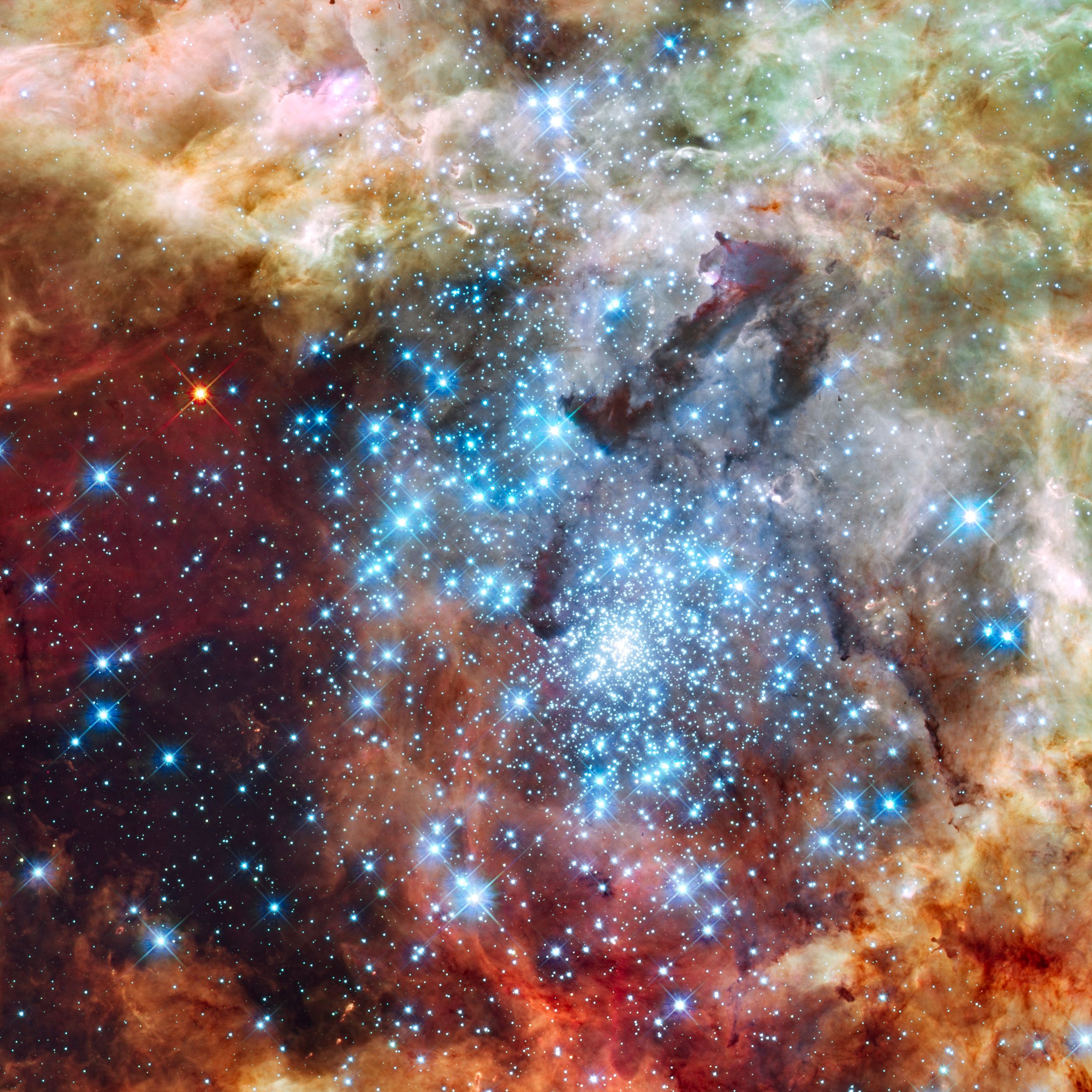
How often do you like to change the look of your phone? You have no shortage of options for tweaking your wallpaper, considering how Google regularly includes new community-created wallpapers with Android updates, and third-party wallpaper apps regularly Also introduce new content. One of our favorite and most unexpected sources involves turning to the heavens for some astronomical wallpaper. Today we’re checking out the latest wallpaper-grade shot of the Tarantula Nebula, courtesy of the Hubble Space Telescope.
ANDROID police video of the day
Hubble has been in operation for decades, and was recently joined in orbit by the James Webb Telescope, which with its images will continue to push the envelope for cosmic studies and space researchers. Thirty-three years into its operational life, Hubble shows no signs of letting up, as evidenced by the Tarantula Nebula images recently shared by NASA. No matter how cropped or resized, there’s no denying that this collection of distant swirling red gas makes for a great wallpaper on the best Android phones and tablets.

An old Hubble image of the Tarantula Nebula
NASA reports that the Tarantula Nebula, also known as 30 Doradus, is the brightest star-forming region in our galaxy. It is also home to many massive stars, making it the best testing ground for theories of star evolution. All the ionized hydrogen gas and scores of never-before-seen stars in the region mean it’s a regular area of interest for the space telescope pair.
Like most astrophotography shots, this new image is a composite. This shot combines data about grains in the dark spaces between stars with data from another program that studies star formation. Hubble’s work is essentially laying the groundwork for future scientific exploration with the Webb telescope.


James Webb’s images of the Tarantula Nebula
You can download these full-resolution images of the nebula from NASA’s website, which should be high enough resolution for even the most pixel-intensive Android screens.