
America’s electric power system is undergoing a radical transformation as the transition from fossil fuels to renewable energy. While the first decade of 2000 saw a huge increase in natural gas production, and 2010 was the decade of wind and solar, early signs suggest that the innovations of 2020 could be a boom in “hybrid” power plants.
A typical hybrid power plant combines power generation with battery storage in a single location. This often means solar or wind farms combined with massive batteries. Solar panels and battery storage can work together to generate renewable energy when solar power is at its peak during the day and then release it as needed after the sun goes down.
A look at the power and storage projects in the development pipeline offers a glimpse into the future of hybrid power.
Our team at Lawrence Berkeley National Laboratory found that a staggering 1,400 gigawatts of proposed production and storage projects applied to be connected to the grid more than all existing US power plants combined. The largest group are now solar projects, and more than a third of those projects involve hybrid solar plus battery storage.
While these power plants of the future offer many benefits, they also raise questions about how the electric grid should best operate.
Why do hybrids get hot
As wind and solar grow, they are beginning to have a major impact on the grid.
Solar power already accounts for more than 25% of annual electricity generation in California and is spreading rapidly in other states such as Texas, Florida and Georgia. “Wind Belt” states from the Dakota to Texas have seen large-scale deployments of wind turbines, with Iowa now getting most of its power from the wind.
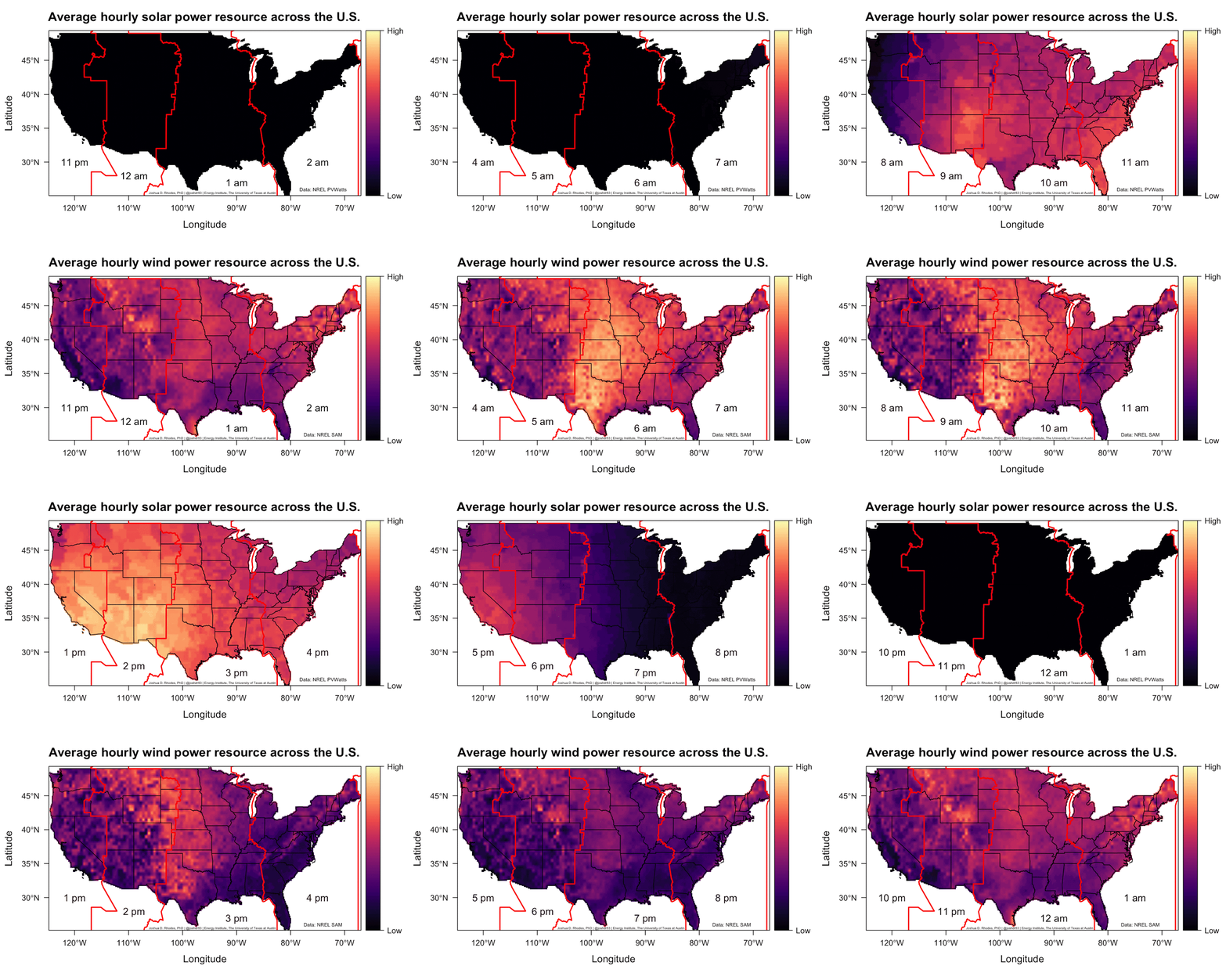
This high percentage of renewable energy raises a question: How do we integrate renewable sources that produce large but varying amounts of electricity throughout the day?
Joshua Rhodes / University of Texas at Austin.
That’s where storage comes in. Lithium-ion battery prices have fallen sharply as production in the electric vehicle market has increased in recent years. While there are concerns about future supply chain challenges, there is potential for battery design to evolve as well.
The combination of solar and batteries allows hybrid plant operators to provide electricity through the most valuable hours when demand is strongest, such as summer afternoons and evenings when air conditioners are running on high. Batteries help streamline production from wind and solar power, store excess electricity that would otherwise be depleted, and reduce congestion on the grid.
Hybrids dominate the project pipeline
At the end of 2020, there were 73 solar and 16 wind hybrid projects underway in the US, amounting to 2.5 GW of generation and 0.45 GW of storage.
Today, solar and hybrids dominate the development pipeline. By the end of 2021, more than 675 gigawatts of proposed solar plants had applied for grid connection approval, of which more than a third were connected with storage. Another 247 gigawatts of wind farms were in line, with 19 gigawatts, or about 8% of them, in the form of hybrids.

Of course, applying for a connection is only one step in the development of a power plant. A developer also needs land and community agreements, a sales contract, financing and permits. Of the four new plants proposed between 2010 and 2016, only one made it to commercial operation. But the depth of interest in hybrid plants shows strong growth.
In markets like California, batteries are essentially mandatory for new solar developers. Since solar is often responsible for most of the day’s market power, building more provides little value. Currently 95% of all proposed large-scale solar capacity in the California queue comes with batteries.
5 Lessons on Hybrids and Questions for the Future
The opportunity for growth in renewable hybrids is clearly large, but it does raise some questions that our group at Berkeley Lab is investigating.
Here are some of our top findings:
- Investing pays off in many areas. We found that adding batteries to a solar power plant increases the cost, so does the cost of electricity. Keeping production and storage in one place can benefit from tax credits, construction cost savings and operational flexibility. Given the revenue potential in recent years, and with the help of federal tax credits, the added value justifies the higher price.
- Co-location also means tradeoffs. Wind and solar perform best where wind and solar resources are strongest, but batteries provide the most value where they can provide the greatest grid benefits, such as congestion relief. This means that there are trade-offs when determining the best position with the highest price. Federal tax credits that can only be earned if the batteries are co-located with solar may encourage sub-decisions in some cases.
- There is no one best combination. The value of a hybrid plant is partly determined by the configuration of the equipment. For example, the size of the battery relative to the solar generator can determine how long a plant can deliver electricity in the evening. But the price of electricity at night depends on the local market conditions, which varies throughout the year.
- There is a need to evolve the rules of the electricity market. Solar and storage can participate independently with bidding in the hybrid power market as a single entity or as separate entities. Hybrids can be either sellers or buyers of electricity or both. It can be complicated. Market participation rules for hybrids are still evolving, leaving plant operators to experiment with how they sell their services.
- Small hybrids create new opportunities: Hybrid power plants can also be small, such as solar and batteries in a home or business. Such hybrids have become the norm in Hawaii as solar power saturates the grid. In California, customers who shut down power to prevent wildfires are increasingly adding storage to their solar systems. These “behind-the-meter” hybrids raise questions about how they should be evaluated, and how they can contribute to grid operations.
Hybrids are just getting started, but a lot is on the way. More research is needed on technologies, market design and regulations to ensure grid and grid pricing evolves with them.
While questions remain, it is clear that hybrids are redefining power plants. And they may be remaking the American power system in the process.
This article is republished from The Conversation under a Creative Commons license. Read the original article.


