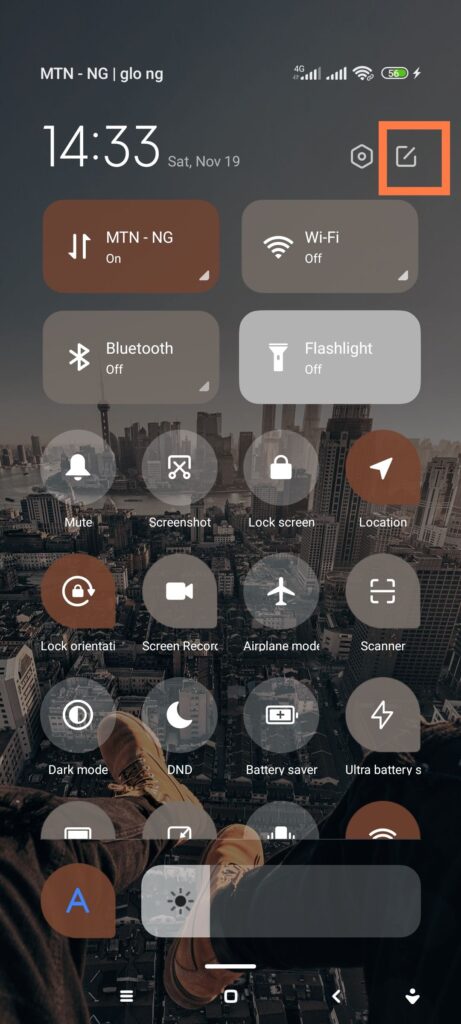
There is no such thing as a smartphone with an operating system Android that does not have the following physical buttons: the volume up or down button, and the one that locks, unlocks, restarts or turns off the device. These are normally found on the right side of the mobile device, however, it is also possible to add them digitally on the touch screen, something that Mag will show you below.
It is important to clarify that after converting the aforementioned physical buttons into digital ones, they will have the same functions that we mentioned before, except for the safe mode and the emergency mode, everything else will be the same.
Also, making this setting Android It has its benefits, since it will help you increase the useful life of the physical buttons, the same ones that you usually press or press every day; on the other hand, it will prevent you from stretching your finger to raise or lower the volume of your mobile phone and if they don’t work, you have a second option to use them.
THE GUIDE TO CONVERTING THE PHYSICAL BUTTONS OF THE ANDROID CELL PHONE INTO DIGITAL BUTTONS
- First, enter the “Settings” or “Settings” of the smartphone Androidyou locate it with the icon of a cogwheel or gear.
- Then, find and click on the section that says “Additional settings”.
- Here tap on the option called “Floating Ball”, the names may vary slightly depending on the make and model of the device.
- The next step is to activate the “Floating Ball” switch, which appears at the top.
- A rung will automatically be enabled on the right side of the touch screen, press it.
- Finally, some digital buttons will be displayed so that you can control the phone without the need to use the physical ones.
How to enable automatic app update on Android
- Open the Google Play Store from Android and tap on your profile picture icon in the top right.
- Go to “Manage device and apps”.
- In this part you will see how many updates you have pending and the use of gigabytes that you have consumed from storage. If you want you can do it manually, otherwise do the following.
- Go back to Google Play and press again on your profile picture > “Settings” or “Settings” > “Network preferences”.
- Now, click on the section called “Automatic update of apps”.
- Choose if you want Android Update apps over any network (including mobile data on) or only when connected to Wi-Fi.